Showing posts with label elizabeth ii. Show all posts
Showing posts with label elizabeth ii. Show all posts
Today's Pic: 85 and Still Working
Queen Elizabeth II may have turned 85 today--well past the age of retirement for any industrialized nation--but she didn't take the day off. Instead, she and her husband Prince Philip, who will be 90, in June participated in a traditional Maundy Thursday ceremony, distributing commemorative coins selected "senior citizens". I wonder if any of them were younger than she is! In bygone centuries, her predecessors also washed the people's feet, in remembrance of a similar act by Jesus. Read our tribute to The Queen on her 85th birthday.

A New Princess is Born

The 26-year-old Duchess of York may have been thinking about finding a home of her own. As she ran her hand over her swollen belly, her thoughts were almost certainly on the family she was starting with her beloved husband, Bertie. Soon, her pangs began to increase and she retired to a specially prepared room with three doctors to look after her.
As the day progressed, reporters arrived at 17 Bruton Street. They were escorted to another room where they were treated as guests while they awaited news of this interesting but not very important birth.
After all, this child would only be third in line after the 31-year-old Prince of Wales (who would certainly marry and begin a family) and his younger brother the Duke of York. This baby would likely spend its life moving further and further down the line.
This child wasn’t even the first grandchild of King George V and Queen Mary. Their daughter, the Princess Royal, had already presented them with two grandsons.
Nevertheless, throughout the day, people started gathering outside of the elegant townhouse of the Earl and Countess of Strathmore. Anticipation was building on the street, but inside things were not developing smoothly. The tiny royal highness was not positioning properly and the petite duchess was facing a long struggle.
As the sun set and darkness engulfed the house, the anxious father was putting the Earl’s rugs through a real workout and burning his way through cigarette after cigarette. Despite his nervousness and his well-documented stammer, he still took time to pop in to visit with the reporters and the official government representative. In the duchess’s room, the doctors finally determined that the breech baby would not turn around. The only answer for both mother and child was caesarean section.
Finally, at 2:40 a.m. on April 21, 1926, a little princess entered the world. At four a.m., the king and queen were awakened with the happy news. That afternoon they visited their first granddaughter and the stodgy, middle-aged Queen Mary immediately fell in love with her. “Saw the baby, who is a little darling,” she gushed in her diary, marking the beginning of a close and loving relationship between the queen and the granddaughter who would grow to resemble her in appearance and temperament.
The Duke of York consulted the king about the baby’s name, as royal tradition required. Elizabeth, the duke proposed in honor of his darling wife. Alexandra in honor of the baby’s grandmother, the gorgeous Danish princess who became a beloved British queen and who had died only a few months earlier. And, Mary after the queen. The king noted that the name Victoria was not included—“I quite approve…He says nothing about Victoria. I hardly think that necessary,” George wrote.

Funny how a person’s life can take an unexpected turn. And, while Queen Elizabeth II may not have been born to inherit the throne, few would argue that she was destined to be queen.
WORKS CONSULTED
Succession Series: Born to Be King?
(For background on this series, click here.)
 Princess Elizabeth of York was the world’s darling from the moment of her birth in 1926. She was an instant celebrity gracing the covers of magazines with photos of her released at regular intervals. Stories about her seemed to enchant people. How did she dress? What were her favorite toys? How did she turn the gruff old King George V into a tiny girl’s playmate?
Despite this fascination, absolutely no one dreamed she would one day become queen. She was born #3 in the line of succession after her father, Albert Duke of York, and his older brother, Edward Prince of Wales. It was expected that the charming, thirty-something Prince of Wales would marry and beget more heirs. Furthermore, the Duke and Duchess of York would probably have a large family (he had six siblings; she had nine), some of whom would surely be boys who would supplant their older sister.
It seemed that the delightfully celebrated little Princess Elizabeth was destined to grow up as a cadet member of the royal family, probably living a comfortable and pleasant life in the country with her horses and dogs.
Fate, however, intervened.
First, her parents had only one more child, another little princess. Then, when Elizabeth was nine years old, her beloved “Grandpapa England” died. Her now forty-something uncle became king. Since he was still a bachelor, Elizabeth moved up to #2 in the succession. Elizabeth’s darling uncle was spending less and less time with her, but it wasn’t the duties of kingship keeping him away; it was his growing obsession with his married mistress Wallis Simpson. By the end of the year, he had decided that Wallis was more important to him than the throne. He abdicated, Elizabeth’s dad became King George VI, and little Elizabeth was suddenly and unexpectedly the heir presumptive of the British Empire. Just 16 years later, her father’s premature death made her queen at the tender age of 25.
Since the Act of Settlement in 1701, only nine people were born in the direct line of succession. Only half of them inherited the throne. Additionally, four indirect heirs (including Elizabeth) eventually became monarchs. Here is a breakdown:
DIRECT HEIRS
Frederick Prince of Wales (1707-1751)
Born during the reign of Queen Anne, Frederick was the fourth generation direct heir under the guidelines of the recent Act of Settlement. He was #4 after his father (the future George II), his grandfather (the future George I) and his great-grandmother Electress Sophia of Hanover. Sophia (1630-1714) and her descendants had been selected as the only legal heirs of Queen Anne, who had no surviving children. Sophia died shortly before Anne and so did not inherit the throne. George I decided to leave his seven-year-old grandson in Hanover, which meant Frederick grew up separated from his family. By the time, his father became king in 1727, a deep rift had developed and Frederick was left in Hanover for a while longer. He was eventually allowed to come to England, he got married and he fathered nine children. However, he predeceased his father by nine years and never made it to the throne.
Princess Augusta of Wales (1737-1813)
 The first child of Frederick Prince of Wales, Augusta was born at #2 after her father. She would have become queen, if only she had had no brothers. As it was, she remained a direct heir for less than a year, when she was supplanted by her little brother George. More brothers and their descendants pushed her further down the line, falling as low as #18. She was even superseded by her own granddaughter. How is that possible? Augusta’s daughter, Caroline of Brunswick, married her oldest nephew, the Prince of Wales, who was #1. So, their only child, Princess Charlotte Augusta of Wales, was #2. At the time of her death, Augusta had moved back up a couple of spots to #16.
King George III (1738-1820)
As the first son of Frederick Prince of Wales, George took his older sister Augusta’s place at #2. When his father died in 1751, the 13-year-old prince moved to #1 and eventually became king at the age of 22. Despite being quite a moral stickler (or perhaps because of it!), his giant brood was full of rapscallion sons and overprotected daughters. Sadly, the long-lived George descended into mania likely caused by a metabolic disorder called porphyria and spent the last decade of his reign in oblivion isolated from his large family. When his precious granddaughter Princess Charlotte Augusta’s death caused a succession crisis in 1817 and his beloved wife died in 1818, George was completely unaware of either ocurrence.
King George IV (1762-1830)
George was the first of King George III’s plentiful progeny and the first person to be born at #1 since the Act of Settlement. Young George loved dressing well, building elaborate homes and having a rollicking good time with older, particularly married, women. In 1785, he married the twice-widowed Maria Fitzherbert. This secret marriage invalidated his claim to the throne because not only lacked the he did not have the king’s permission, but Maria was a Catholic. By 1795, George's debts were massive; unaware of the illegal wife, the king agreed to pay George's debts if he married. So, he married his first cousin, Princess Caroline of Brunswick. In a reaction more violent than when Henry VIII met his “Flanders mare”, the two instantly hated each other, but they miraculously had one child, Princess Charlotte Augusta, exactly nine months after their wedding. George spent the next 22 years trying to get rid of Caroline and even locked her out of his coronation in 1820. He reigned for 10 years. Technically, his bigamous second marriage was also invalid.
Princess Charlotte Augusta of Wales (1996-1817)
 Princess Charlotte Augusta was the “People’s Princess” of her day. Born at #2 to warring parents, she spent her childhood living in her own household often ignored by both of them and at other times being used as a weapon in their battle with each other. Although hoydenish, Charlotte Augusta’s youth, beauty and unaffected manner set her apart from her dissolute father and his equally disreputable brothers in the minds of the people. She gained even more popularity when she refused to marry the man her father selected because the marriage would require her to live outside of England. When she enacted a kind of reverse fairytale by marrying a man of her own choosing, Charlotte Augusta sealed her position in the hearts of the people. Her death in childbirth devastated the nation and caused a succession crisis. Suddenly, her middle-aged uncles were on the hunt for royal brides, dreaming of capturing the crown for themselves. Charlotte remained #2 throughout her entire life. [Read more about Charlotte Augusta]
Princess Victoria The Princess Royal (1840-1901)
Once the dynastic dust settled after Princess Charlotte Augusta’s death, a young Queen Victoria married and started her own family. Her first child was a bright and beautiful girl whom she named for herself. Vicky was born #1 and is the only person born #1 who did not ascend the throne; she was supplanted by a brother less than a year after her birth. A princessly prodigy, Vicky was the beloved favorite child of her father Prince Albert, far surpassing the heir who never managed to live up to his parents’ expectations. Like the current queen, Vicky fell in love when she was just an adolescent. At 17, she was allowed to marry her sweetheart and the two remained practically inseparable until his death in 1888. Vicky survived another 13 years, but was too ill with cancer to travel to England for the death and funeral of her mother in 1901. She died later that year. After numerous brothers who had numerous children and grandchildren, Vicky had fallen from #1 to #28.
King Edward VII (1841-1910)
Queen Victoria’s firstborn son displaced his older sister at #1. Named Albert Edward in honor of his father and grandfather. He was not clever like his older sister and he got into some adolescent romantic entanglements, which led both of his parents to conclude that he was morally lax. When an already-ill Prince Albert traveled in terrible weather to chastise the prince for one of these peccadilloes, he contracted a fatal illness and died at the age of 43. Queen Victoria blamed her son. For the next four decades, she denied him any responsibilities, leaving the fun-loving prince with no useful occupation. By the time he became king in 1901 at the age of almost 60, his fast-living ways had likely taken their toll. Opting not to use his father’s name, (I wonder why—hmmm?) he reigned as King Edward VII for only nine years.
Prince Albert Victor The Duke of Clarence (1864-1892)
Prince Albert Victor was the first child of the future King Edward VII. Born at #2, he was everything Victoria and Albert had feared his father was. Albert Victor’s tutors were unable to teach him anything and his service in the navy and then the army yielded no achievements. Even more inclined to fast living than his father, Albert Victor rutted in dissipation, likely contracting venereal disease and even being one of the suspects for Jack the Ripper, which is highly unlikely. All that the prince had going for him was his good lucks and amiable charm. When a royal bride was found for him, he obligingly fell in love and proposed. Weeks later, however, he died from pneumonia just days after his 28th birthday. [Read more about Albert Victor]
King Edward VIII (1894-1972)
Born at #3 behind his father, the future King George V, and his grandfather, the future, King Edward VII, Prince Edward was handsome and charming. Dispatched on numerous international tours, he attracted huge crowds and the newfangled newsreel cameras everywhere he went. There was even a song written about him called, “I Danced with a Man Who Danced with the Prince of Wales.” Behind the scenes, however, he was not a happy person. He really did not like the formality of being royal and the limitations it placed upon him. He also enjoyed spending time with married ladies, indulging in a series of affairs kept secret from his adoring public. Meanwhile, the media constantly speculated about which princess he would marry. His father grew increasingly distraught, famously and accurately predicting that after his own death, the prince would ruin himself in a year. Once he became king in January 1936, he decided he would marry his married mistress Wallis Simpson. The British press had kept the affair quiet, so when the news broke, the nation was stunned. Almost as soon as they heard about it, the king abdicated. It was December 1936. Now The Duke of Windsor, he married Wallis and they lived among the international jetset. He died in 1972.
INDIRECT HEIRS
Three eventual monarchs were not born directly in the line of succession. Two of them were younger brothers of the direct heir and two of them, including the current queen (described above) were nieces.
King William IV (1765-1837)
Born at #3, William The Duke of Clarence was the third son of King George III. After joining the navy, he settled down with his mistress and they had 10 children. In the meantime, William’s two older brothers had each married princesses but only had one child between them, Princess Charlotte Augusta. When she died, it was clear that the now 52-year-old sailor prince would eventually become king. He found a royal bride, Princess Adelaide of Saxe-Meinengen, who was exactly half his age. Having fathered so many children already, William undoubtedly expected to have numerous royal heirs of his own, but none of Adelaide's children lived. When he ascended the throne in 1830, he accepted his next brother the late Duke of Kent’s only child, Princess Victoria, as his heir. However, he feared dying before the little girl reached 18--he wanted her to rule in her own right instead of under her mother’s regency. Stubborn until the end, he lived just long enough, dying a month after Victoria’s eighteenth birthday.
Queen Victoria (1819-1901)
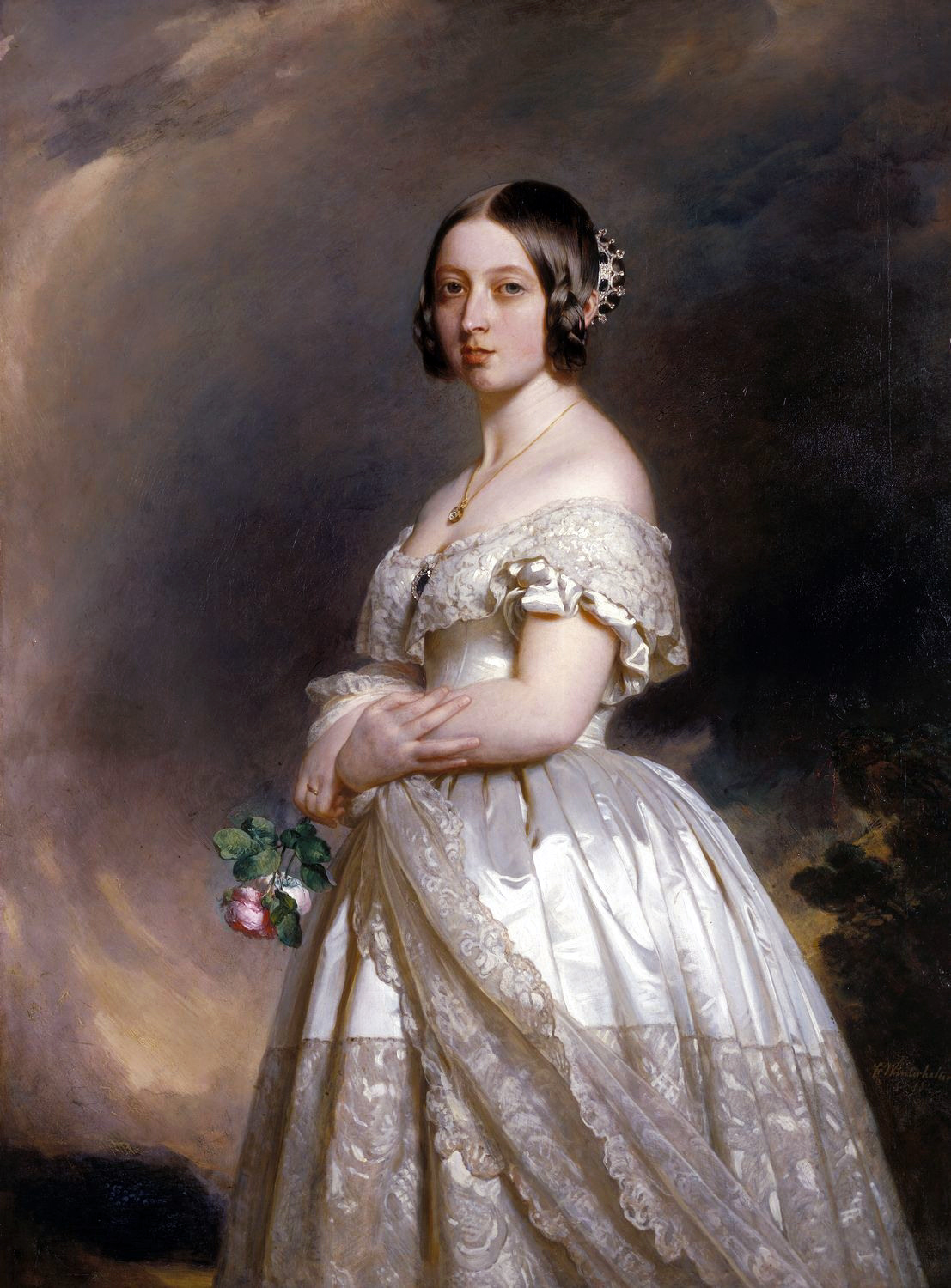
 When King George III’s only legitimate grandchild unexpectedly died in 1817, the old king’s unmarried, middle-aged sons acquired royal wives and started trying for an heir. [Read about the Royal Baby Race] Son number four, Edward The Duke of Kent and his new wife had Victoria 12 months after the wedding. She was #5 and it seemed unlikely they she would eventually ascend the throne: both her Uncle William and her father would probably have a son who would supplant her. But, her father died before her first birthday and Uncle William had no surviving legitimate children. Victoria became queen at 18 and soon embarked, although unintentionally, on creating a huge dynast. Although she repeatedly said she didn’t want a large, she also famously enjoyed her husband’s “company.” The first of their nine children was born ten months after the wedding. When she died in 1901, she was the head of a family that included more than 70 living descendents
George V (1865-1936)
The second son of the future King Edward VII, George was born #3. The good-natured George was believed to have a positive effect on his charming but slow-witted older brother, Prince Albert Victor. So, whatever Albert Victor did, George was sent along too—including being placed in the navy when he was only 10 years old. Fortunately, George adored his older brother and he made a pretty good navy officer. George never had the slightest thought about being king one day. His world changed forever when Albert Victor died in 1894. George was named The Duke of York and encouraged to marry his late brother’s fiancée, which he did. Sixteen years later, he was kept his. George lived until 1936, devoted to his wife, his family, his nation and his stamp collection.
George VI (1894-1952)
Born on the anniversary of his great-grandfather’s death, Prince Albert Frederick Arthur George was the second son of the future King George V. He was #4 following his grandfather, father and older brother. Instead of seeing his unfortunate birthday in a negative light, Queen Victoria surprised everyone by declaring that it was a blessing for him. It’s unclear whether she was right. Bertie, as he was called, developed severe digestive problems following years of abuse by a nanny. He also suffered from knock knees, which were corrected by years of wearing painful metal braces. These two circumstances combined with emotionally distant parents likely contributed to his famous stammer. Bertie was no one’s idea of a king. When it became clear that his brother, King Edward VIII, was going to abandon the throne, some even speculated that Bertie and his daughters might be passed over in favor of one of his younger brothers. But Bertie had an unshakeable sense of duty. Upon his accession, he chose to use the last of his names in honor of his late father. Throughout World War II, he and his young family were symbols of stability and continuity. Unfortunately, Bertie exacerbated his lifelong ill health heavy smoking heavily, which led directly to his death in his mid-50s.
Go to Succession Series index
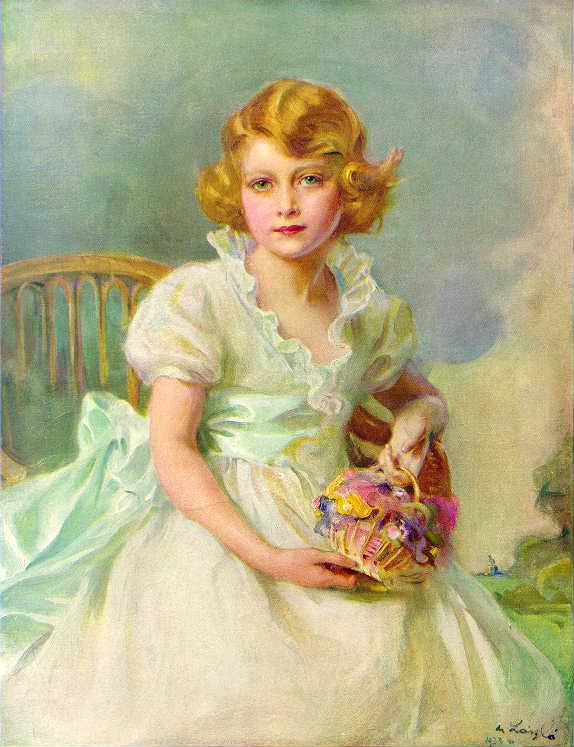
Despite this fascination, absolutely no one dreamed she would one day become queen. She was born #3 in the line of succession after her father, Albert Duke of York, and his older brother, Edward Prince of Wales. It was expected that the charming, thirty-something Prince of Wales would marry and beget more heirs. Furthermore, the Duke and Duchess of York would probably have a large family (he had six siblings; she had nine), some of whom would surely be boys who would supplant their older sister.
It seemed that the delightfully celebrated little Princess Elizabeth was destined to grow up as a cadet member of the royal family, probably living a comfortable and pleasant life in the country with her horses and dogs.
Fate, however, intervened.
First, her parents had only one more child, another little princess. Then, when Elizabeth was nine years old, her beloved “Grandpapa England” died. Her now forty-something uncle became king. Since he was still a bachelor, Elizabeth moved up to #2 in the succession. Elizabeth’s darling uncle was spending less and less time with her, but it wasn’t the duties of kingship keeping him away; it was his growing obsession with his married mistress Wallis Simpson. By the end of the year, he had decided that Wallis was more important to him than the throne. He abdicated, Elizabeth’s dad became King George VI, and little Elizabeth was suddenly and unexpectedly the heir presumptive of the British Empire. Just 16 years later, her father’s premature death made her queen at the tender age of 25.
Since the Act of Settlement in 1701, only nine people were born in the direct line of succession. Only half of them inherited the throne. Additionally, four indirect heirs (including Elizabeth) eventually became monarchs. Here is a breakdown:
DIRECT HEIRS
Frederick Prince of Wales (1707-1751)
Born during the reign of Queen Anne, Frederick was the fourth generation direct heir under the guidelines of the recent Act of Settlement. He was #4 after his father (the future George II), his grandfather (the future George I) and his great-grandmother Electress Sophia of Hanover. Sophia (1630-1714) and her descendants had been selected as the only legal heirs of Queen Anne, who had no surviving children. Sophia died shortly before Anne and so did not inherit the throne. George I decided to leave his seven-year-old grandson in Hanover, which meant Frederick grew up separated from his family. By the time, his father became king in 1727, a deep rift had developed and Frederick was left in Hanover for a while longer. He was eventually allowed to come to England, he got married and he fathered nine children. However, he predeceased his father by nine years and never made it to the throne.
Princess Augusta of Wales (1737-1813)

King George III (1738-1820)
As the first son of Frederick Prince of Wales, George took his older sister Augusta’s place at #2. When his father died in 1751, the 13-year-old prince moved to #1 and eventually became king at the age of 22. Despite being quite a moral stickler (or perhaps because of it!), his giant brood was full of rapscallion sons and overprotected daughters. Sadly, the long-lived George descended into mania likely caused by a metabolic disorder called porphyria and spent the last decade of his reign in oblivion isolated from his large family. When his precious granddaughter Princess Charlotte Augusta’s death caused a succession crisis in 1817 and his beloved wife died in 1818, George was completely unaware of either ocurrence.
King George IV (1762-1830)
George was the first of King George III’s plentiful progeny and the first person to be born at #1 since the Act of Settlement. Young George loved dressing well, building elaborate homes and having a rollicking good time with older, particularly married, women. In 1785, he married the twice-widowed Maria Fitzherbert. This secret marriage invalidated his claim to the throne because not only lacked the he did not have the king’s permission, but Maria was a Catholic. By 1795, George's debts were massive; unaware of the illegal wife, the king agreed to pay George's debts if he married. So, he married his first cousin, Princess Caroline of Brunswick. In a reaction more violent than when Henry VIII met his “Flanders mare”, the two instantly hated each other, but they miraculously had one child, Princess Charlotte Augusta, exactly nine months after their wedding. George spent the next 22 years trying to get rid of Caroline and even locked her out of his coronation in 1820. He reigned for 10 years. Technically, his bigamous second marriage was also invalid.
Princess Charlotte Augusta of Wales (1996-1817)

Princess Victoria The Princess Royal (1840-1901)
Once the dynastic dust settled after Princess Charlotte Augusta’s death, a young Queen Victoria married and started her own family. Her first child was a bright and beautiful girl whom she named for herself. Vicky was born #1 and is the only person born #1 who did not ascend the throne; she was supplanted by a brother less than a year after her birth. A princessly prodigy, Vicky was the beloved favorite child of her father Prince Albert, far surpassing the heir who never managed to live up to his parents’ expectations. Like the current queen, Vicky fell in love when she was just an adolescent. At 17, she was allowed to marry her sweetheart and the two remained practically inseparable until his death in 1888. Vicky survived another 13 years, but was too ill with cancer to travel to England for the death and funeral of her mother in 1901. She died later that year. After numerous brothers who had numerous children and grandchildren, Vicky had fallen from #1 to #28.
King Edward VII (1841-1910)
Queen Victoria’s firstborn son displaced his older sister at #1. Named Albert Edward in honor of his father and grandfather. He was not clever like his older sister and he got into some adolescent romantic entanglements, which led both of his parents to conclude that he was morally lax. When an already-ill Prince Albert traveled in terrible weather to chastise the prince for one of these peccadilloes, he contracted a fatal illness and died at the age of 43. Queen Victoria blamed her son. For the next four decades, she denied him any responsibilities, leaving the fun-loving prince with no useful occupation. By the time he became king in 1901 at the age of almost 60, his fast-living ways had likely taken their toll. Opting not to use his father’s name, (I wonder why—hmmm?) he reigned as King Edward VII for only nine years.
Prince Albert Victor The Duke of Clarence (1864-1892)
Prince Albert Victor was the first child of the future King Edward VII. Born at #2, he was everything Victoria and Albert had feared his father was. Albert Victor’s tutors were unable to teach him anything and his service in the navy and then the army yielded no achievements. Even more inclined to fast living than his father, Albert Victor rutted in dissipation, likely contracting venereal disease and even being one of the suspects for Jack the Ripper, which is highly unlikely. All that the prince had going for him was his good lucks and amiable charm. When a royal bride was found for him, he obligingly fell in love and proposed. Weeks later, however, he died from pneumonia just days after his 28th birthday. [Read more about Albert Victor]
King Edward VIII (1894-1972)
Born at #3 behind his father, the future King George V, and his grandfather, the future, King Edward VII, Prince Edward was handsome and charming. Dispatched on numerous international tours, he attracted huge crowds and the newfangled newsreel cameras everywhere he went. There was even a song written about him called, “I Danced with a Man Who Danced with the Prince of Wales.” Behind the scenes, however, he was not a happy person. He really did not like the formality of being royal and the limitations it placed upon him. He also enjoyed spending time with married ladies, indulging in a series of affairs kept secret from his adoring public. Meanwhile, the media constantly speculated about which princess he would marry. His father grew increasingly distraught, famously and accurately predicting that after his own death, the prince would ruin himself in a year. Once he became king in January 1936, he decided he would marry his married mistress Wallis Simpson. The British press had kept the affair quiet, so when the news broke, the nation was stunned. Almost as soon as they heard about it, the king abdicated. It was December 1936. Now The Duke of Windsor, he married Wallis and they lived among the international jetset. He died in 1972.
INDIRECT HEIRS
Three eventual monarchs were not born directly in the line of succession. Two of them were younger brothers of the direct heir and two of them, including the current queen (described above) were nieces.
King William IV (1765-1837)
Born at #3, William The Duke of Clarence was the third son of King George III. After joining the navy, he settled down with his mistress and they had 10 children. In the meantime, William’s two older brothers had each married princesses but only had one child between them, Princess Charlotte Augusta. When she died, it was clear that the now 52-year-old sailor prince would eventually become king. He found a royal bride, Princess Adelaide of Saxe-Meinengen, who was exactly half his age. Having fathered so many children already, William undoubtedly expected to have numerous royal heirs of his own, but none of Adelaide's children lived. When he ascended the throne in 1830, he accepted his next brother the late Duke of Kent’s only child, Princess Victoria, as his heir. However, he feared dying before the little girl reached 18--he wanted her to rule in her own right instead of under her mother’s regency. Stubborn until the end, he lived just long enough, dying a month after Victoria’s eighteenth birthday.
Queen Victoria (1819-1901)
George V (1865-1936)
The second son of the future King Edward VII, George was born #3. The good-natured George was believed to have a positive effect on his charming but slow-witted older brother, Prince Albert Victor. So, whatever Albert Victor did, George was sent along too—including being placed in the navy when he was only 10 years old. Fortunately, George adored his older brother and he made a pretty good navy officer. George never had the slightest thought about being king one day. His world changed forever when Albert Victor died in 1894. George was named The Duke of York and encouraged to marry his late brother’s fiancée, which he did. Sixteen years later, he was kept his. George lived until 1936, devoted to his wife, his family, his nation and his stamp collection.
George VI (1894-1952)
Born on the anniversary of his great-grandfather’s death, Prince Albert Frederick Arthur George was the second son of the future King George V. He was #4 following his grandfather, father and older brother. Instead of seeing his unfortunate birthday in a negative light, Queen Victoria surprised everyone by declaring that it was a blessing for him. It’s unclear whether she was right. Bertie, as he was called, developed severe digestive problems following years of abuse by a nanny. He also suffered from knock knees, which were corrected by years of wearing painful metal braces. These two circumstances combined with emotionally distant parents likely contributed to his famous stammer. Bertie was no one’s idea of a king. When it became clear that his brother, King Edward VIII, was going to abandon the throne, some even speculated that Bertie and his daughters might be passed over in favor of one of his younger brothers. But Bertie had an unshakeable sense of duty. Upon his accession, he chose to use the last of his names in honor of his late father. Throughout World War II, he and his young family were symbols of stability and continuity. Unfortunately, Bertie exacerbated his lifelong ill health heavy smoking heavily, which led directly to his death in his mid-50s.
Go to Succession Series index
"The Spare" Answers
Princes William and Harry have often been referred to as "The Heir and the Spare." Throughout history, the British line of succession has been somewhat precarious.
1. How many English monarchs since the Norman Conquest have been directly succeeded by their firstborn son?
Relatively few. William the Conqueror himself was succeeded by his third son, William II, who seized the throne while his oldest brother wasn't looking. (The second son had died as a teen while hunting in the New Forest, which seems to have been a very deadly place.)
The first firstborn son to succeed the English throne was Henry III who followed his father King John 150 years after the conquest. Then, Henry III was succeeded by his own firstborn son Edward I.
The others were Edward II to Edward III; Henry V to Henry VI; Edward IV to Edward V; George I to George II; George III to George IV; and George V to Edward VIII.
The only time a reigning queen has been succeeded by her firstborn son was when Queen Victoria was succeeded by her son Edward VII. In fact, that is the only time an English queen has ever been succeeded by her own child. Let's see if Elizabeth II becomes the second to do so or if, as some suggest, Charles will be skipped over for his son, William--an unlikely occurrence by my estimation.
So, out of 43 monarchs, only nine were succeeded by their firstborn sons.
[Others offered by respondents included Henry IV to Henry V, but Henry actually had an earlier son named Edward who died after four days. Another suggestion, Henry VIII was suceeded by his first surviving son, Lady Jane Seymour's child, Edward VI; but Henry had several sons by his first two wives, including two who lived long enough to be named Henry, one of whom was even named Prince of Wales. And, in the case of Charles I to Charles II, not only was there an infant older brother named Charles James, but Charles II technically did not succeed his father directly because of the interregnum following the Civil War.]
2. How many English monarchs since the Norman Conquest have been directly succeeded by their firstborn daughter?
This list is of course much shorter since there have been so few reigning queens. However, only one-third of six queens were the firstborn daughters AND directly followed their fathers. Mary II succeeded her father James II after the Glorious Revolution of 1688; she reigned jointly with her husband/cousin William III. The only other firstborn daughter to directly succeed her father is the current Queen Elizabeth II who followed her father George VI.
It could be argued that Mary I was the firstborn daughter of Henry VIII since her only older sister was stillborn. However, she succeeded her brother Edward VI rather than her father.
Finally, several respondents also point to the case of Empress Matilda, who became known as the "Lady of the English." She was the firstborn daughter of Henry II, who had the barons swear allegiance to her as his heir. However, she was out of the country when he died and her cousin Stephen usurped the throne. Stephen and Matilda fought a nasty back-and-forth war for many years. At one point, Matilda did seize control of London and could have been proclaimed queen, but she didn't take care of that business quickly enough. The Londoners were stunned by her high-handedness and soon kicked her out of the city. Ultimately, the conflict was resolved when Stephen agreed to make Matilda's son Henry his heir. [Read my post about Empress Matilda at Princess Palace.]
3. Which English king had the most children become an English monarch?
King Henry VIII literally moved heaven to try to have a living male heir. In his efforts, he married six women, separated the Church of England from the Church in Rome, and fathered only three children who lived beyond early infancy. All three of these children eventually succeeded to the throne. They were, in order of their reigns, Edward VI (the last born), Mary I and Elizabeth I.
Another monarch who technically had three children accede was Henry II. In an effort to ensure an uncontested succession for his son, Henry II (who remember only became king after a bitter war between his mother and her cousin) decided to have his oldest living son crowned king during his own lifetime. This son, also called Henry, was not given a regnal number but he did become known as the Young King. While Henry II and Eleanor of Aquitaine had a huge and healthy brood of children, they led risky lives on the battlefield and in the tournaments. Young King Henry died of dysentery contracted on the battlefield while fighting his father. Leaving no heirs of his own, his place was taken by the next son Richard who was decidedly not crowned during his father's lifetime--partly because he was also warring against his father--but he did succeed him upon his death. When Richard, who spent a matter of only days with his wife, also died without heirs, the throne skipped over the children of the next brother Geoffrey (who died in a tournament) to Henry's youngest son King John. John made Geoffrey's son disappear and kept his daughter imprisoned to solidify his grasp on the throne. So, Henry II did have three regal offspring: Henry, Richard the Lion Heart and King John. [Thanks for the tip, Yvonne Strongman, V.C.R.E.]
4. Which kings were immediately succeeded by their grandchild?
In England, the Prince of Wales has twice predeceased his father but left a living heir to succeed. It first happened when the long-lived Edward III's celebrated son Edward the Black Prince died at the age of 46, leaving behind a 13-year-old son who became Richard II ten years later. It was Richard's death without children that eventually sparked the Wars of the Roses among the descendants of Edward III's other sons.
It happened once again almost 400 years later when the not nearly so beloved Frederick Prince of Wales died at age 44, having fathered nine children, including the future George III who became king nine years later upon the death of his grandfather George II. George II and Frederick had despised each other. Hate, in fact, would not be too strong of a word. The enmity between them was strengthened by the distance placed between them by George's father George I. When the Hanoverian George I became King of England, he allowed his only son, whom he did not like, to come to England, but he forced him to leave his oldest son and heir in Germany. By the time, George II became king, his family had been without the truculent Frederick for so long that George delayed bringing the young man across the Channel. The two were never able to heal their relationship.
5. Which 20th century British monarchs were not firstborn children?
Three of the five 20th century British monarchs were not firstborn children. Edward VII, while the oldest son, was the second child of Queen Victoria. His successor was his second-born son George V and George V's second son succeeded as George VI when the firstborn Edward VIII abdicated.
One other 20th century monarch was the firstborn (and only legitimate) child of her father, the Duke of Kent, but she was the third child of her mother, Victoire of Saxe-Coburg. Although she may not seem very 20th century, Queen Victoria did not die until January 1901 so she just barely qualifies. [Thanks for that one goes to Ella Kay, V.C.R.E.]
1. How many English monarchs since the Norman Conquest have been directly succeeded by their firstborn son?
Relatively few. William the Conqueror himself was succeeded by his third son, William II, who seized the throne while his oldest brother wasn't looking. (The second son had died as a teen while hunting in the New Forest, which seems to have been a very deadly place.)
The first firstborn son to succeed the English throne was Henry III who followed his father King John 150 years after the conquest. Then, Henry III was succeeded by his own firstborn son Edward I.
The others were Edward II to Edward III; Henry V to Henry VI; Edward IV to Edward V; George I to George II; George III to George IV; and George V to Edward VIII.
The only time a reigning queen has been succeeded by her firstborn son was when Queen Victoria was succeeded by her son Edward VII. In fact, that is the only time an English queen has ever been succeeded by her own child. Let's see if Elizabeth II becomes the second to do so or if, as some suggest, Charles will be skipped over for his son, William--an unlikely occurrence by my estimation.
So, out of 43 monarchs, only nine were succeeded by their firstborn sons.
[Others offered by respondents included Henry IV to Henry V, but Henry actually had an earlier son named Edward who died after four days. Another suggestion, Henry VIII was suceeded by his first surviving son, Lady Jane Seymour's child, Edward VI; but Henry had several sons by his first two wives, including two who lived long enough to be named Henry, one of whom was even named Prince of Wales. And, in the case of Charles I to Charles II, not only was there an infant older brother named Charles James, but Charles II technically did not succeed his father directly because of the interregnum following the Civil War.]
2. How many English monarchs since the Norman Conquest have been directly succeeded by their firstborn daughter?
This list is of course much shorter since there have been so few reigning queens. However, only one-third of six queens were the firstborn daughters AND directly followed their fathers. Mary II succeeded her father James II after the Glorious Revolution of 1688; she reigned jointly with her husband/cousin William III. The only other firstborn daughter to directly succeed her father is the current Queen Elizabeth II who followed her father George VI.
It could be argued that Mary I was the firstborn daughter of Henry VIII since her only older sister was stillborn. However, she succeeded her brother Edward VI rather than her father.
Finally, several respondents also point to the case of Empress Matilda, who became known as the "Lady of the English." She was the firstborn daughter of Henry II, who had the barons swear allegiance to her as his heir. However, she was out of the country when he died and her cousin Stephen usurped the throne. Stephen and Matilda fought a nasty back-and-forth war for many years. At one point, Matilda did seize control of London and could have been proclaimed queen, but she didn't take care of that business quickly enough. The Londoners were stunned by her high-handedness and soon kicked her out of the city. Ultimately, the conflict was resolved when Stephen agreed to make Matilda's son Henry his heir. [Read my post about Empress Matilda at Princess Palace.]
3. Which English king had the most children become an English monarch?
King Henry VIII literally moved heaven to try to have a living male heir. In his efforts, he married six women, separated the Church of England from the Church in Rome, and fathered only three children who lived beyond early infancy. All three of these children eventually succeeded to the throne. They were, in order of their reigns, Edward VI (the last born), Mary I and Elizabeth I.
Another monarch who technically had three children accede was Henry II. In an effort to ensure an uncontested succession for his son, Henry II (who remember only became king after a bitter war between his mother and her cousin) decided to have his oldest living son crowned king during his own lifetime. This son, also called Henry, was not given a regnal number but he did become known as the Young King. While Henry II and Eleanor of Aquitaine had a huge and healthy brood of children, they led risky lives on the battlefield and in the tournaments. Young King Henry died of dysentery contracted on the battlefield while fighting his father. Leaving no heirs of his own, his place was taken by the next son Richard who was decidedly not crowned during his father's lifetime--partly because he was also warring against his father--but he did succeed him upon his death. When Richard, who spent a matter of only days with his wife, also died without heirs, the throne skipped over the children of the next brother Geoffrey (who died in a tournament) to Henry's youngest son King John. John made Geoffrey's son disappear and kept his daughter imprisoned to solidify his grasp on the throne. So, Henry II did have three regal offspring: Henry, Richard the Lion Heart and King John. [Thanks for the tip, Yvonne Strongman, V.C.R.E.]
4. Which kings were immediately succeeded by their grandchild?
In England, the Prince of Wales has twice predeceased his father but left a living heir to succeed. It first happened when the long-lived Edward III's celebrated son Edward the Black Prince died at the age of 46, leaving behind a 13-year-old son who became Richard II ten years later. It was Richard's death without children that eventually sparked the Wars of the Roses among the descendants of Edward III's other sons.
It happened once again almost 400 years later when the not nearly so beloved Frederick Prince of Wales died at age 44, having fathered nine children, including the future George III who became king nine years later upon the death of his grandfather George II. George II and Frederick had despised each other. Hate, in fact, would not be too strong of a word. The enmity between them was strengthened by the distance placed between them by George's father George I. When the Hanoverian George I became King of England, he allowed his only son, whom he did not like, to come to England, but he forced him to leave his oldest son and heir in Germany. By the time, George II became king, his family had been without the truculent Frederick for so long that George delayed bringing the young man across the Channel. The two were never able to heal their relationship.
5. Which 20th century British monarchs were not firstborn children?
Three of the five 20th century British monarchs were not firstborn children. Edward VII, while the oldest son, was the second child of Queen Victoria. His successor was his second-born son George V and George V's second son succeeded as George VI when the firstborn Edward VIII abdicated.
One other 20th century monarch was the firstborn (and only legitimate) child of her father, the Duke of Kent, but she was the third child of her mother, Victoire of Saxe-Coburg. Although she may not seem very 20th century, Queen Victoria did not die until January 1901 so she just barely qualifies. [Thanks for that one goes to Ella Kay, V.C.R.E.]
This Week in Princesses
NOVEMBER 27, 2010

Queen Elizabeth II donned a sunny yellow ensemble for the final day of her official visit to several Middle Eastern countries. Hopefully, she stored up some of the warmth and sunshine before returning to London, which received a blanket of snow this week.
NOVEMBER 29, 2010

The usually colorful Queen Margrethe II of Denmark was in more somber colors, choosing a full-length black coat against the bitter London temperatures as she attended a reception at the Danish Embassy honoring the Princess of Wales Royal Regiment. Formed in 1992 and named for Diana Princess of Wales, the regiment's Allied Colonels-in-Chief were Diana and Margrethe. After her divorce, Diana resigned and the Danish queen assumed the honorary duties on her own.
NOVEMBER 30, 2010

Queen Elizabeth II combatted the cold in London by wrapping up in a long, gray shawl for a 'date night' with Prince Philip. You can still see the shiny splendor of her electic blue gown under the dress. The royal copule attended the premiere of "The Chronicles of Narnia: The Voyage of The Dawn Treader." She is said to have enjoyed the film, even tearing up at times.
DECEMBER 1, 2010

Snow on the ground didn't stop Princess Beatrice from wearing an above-the-knee ensemble to The Dickensian Ball at Harrods in Knightsbridge, London. Despite the event's name, I'm guessing you weren't supposed to come dressed as your favorite Dickens character.

Across town in Chelsea, snow obscured the lenses but the photogs still managed to snap a few shots of royal bride-to-be Kate Middleton, dressed in heavy coat and boots, as she launched her holiday season by attending a carol service.
DECEMBER 2, 2010

Letizia Princess of the Asturias made a very small fan when she attended a national volunteering conference in Logrono, Spain.

Snowy weather wasn't the only thing Princess Beatrice and her boyfriend Dave Clark had to face as they attended the opening of new London night club. As they were leaving, an eager young man (who probably had too much to drink) got too close to the princess and her security detail dragged him away. The princess appeared amused by his goofy antics, but the incident highlighted the controversy over whether or not the British public should foot the bill for protecting Beatrice and her sister Eugenie, who are fifth and sixth in line for the throne. (See and read more.)

Across the pond, 19-year-old Princess Alexandra of Greece grabbed the photographers' attention with a wrap skirt and thigh-high purple boots at the Celebrate Room to Grown Benefit Gala at Christie's. The charity honors parents who make "extraordinary efforts to help their babies thrive despite the challenges of poverty."
Queen Elizabeth II donned a sunny yellow ensemble for the final day of her official visit to several Middle Eastern countries. Hopefully, she stored up some of the warmth and sunshine before returning to London, which received a blanket of snow this week.
NOVEMBER 29, 2010
The usually colorful Queen Margrethe II of Denmark was in more somber colors, choosing a full-length black coat against the bitter London temperatures as she attended a reception at the Danish Embassy honoring the Princess of Wales Royal Regiment. Formed in 1992 and named for Diana Princess of Wales, the regiment's Allied Colonels-in-Chief were Diana and Margrethe. After her divorce, Diana resigned and the Danish queen assumed the honorary duties on her own.
NOVEMBER 30, 2010
Queen Elizabeth II combatted the cold in London by wrapping up in a long, gray shawl for a 'date night' with Prince Philip. You can still see the shiny splendor of her electic blue gown under the dress. The royal copule attended the premiere of "The Chronicles of Narnia: The Voyage of The Dawn Treader." She is said to have enjoyed the film, even tearing up at times.
DECEMBER 1, 2010
Snow on the ground didn't stop Princess Beatrice from wearing an above-the-knee ensemble to The Dickensian Ball at Harrods in Knightsbridge, London. Despite the event's name, I'm guessing you weren't supposed to come dressed as your favorite Dickens character.
Across town in Chelsea, snow obscured the lenses but the photogs still managed to snap a few shots of royal bride-to-be Kate Middleton, dressed in heavy coat and boots, as she launched her holiday season by attending a carol service.
DECEMBER 2, 2010
Letizia Princess of the Asturias made a very small fan when she attended a national volunteering conference in Logrono, Spain.
Snowy weather wasn't the only thing Princess Beatrice and her boyfriend Dave Clark had to face as they attended the opening of new London night club. As they were leaving, an eager young man (who probably had too much to drink) got too close to the princess and her security detail dragged him away. The princess appeared amused by his goofy antics, but the incident highlighted the controversy over whether or not the British public should foot the bill for protecting Beatrice and her sister Eugenie, who are fifth and sixth in line for the throne. (See and read more.)
Across the pond, 19-year-old Princess Alexandra of Greece grabbed the photographers' attention with a wrap skirt and thigh-high purple boots at the Celebrate Room to Grown Benefit Gala at Christie's. The charity honors parents who make "extraordinary efforts to help their babies thrive despite the challenges of poverty."
This Week in Princesses
Several royal ladies were flying their flags all over the globe this week, from Hong Kong to Peru to the Middle East. In the Netherlands, a royal wedding brought together a small crowd of royal ladies, but nothing like you'll see when Prince William marries Kate Middleton on April 29, 2011 at Westminster Abbey.
NOVEMBER 20, 2010
 What better way to start the week than with a royal wedding! Prince Carlos of Bourbon-Parma, nephew of the Dutch Queen and the Carlist claimant to the Spanish throne, and his wife, Annemarie Gualtherie van Weezel celebrated their religious wedding ceremony four months after their civil wedding. The ceremony was postponed this summer because of his father's death.

Many royal relatives attended the wedding including the groom's aunt, Queen Beatrix of the Netherlands (center), his cousin Crown Prince Willem Alexander and the Crown Princess Maxima.

The groom's sister Princess Carolina Marchioness of Sala was pretty in purple on the arm of Prince Lorenz of Belgium, who is also an Archduke of Austria. Although the princess is single, her escort is married to the Belgian king's daughter.

The mother of the groom, Princess Irene of the Netherlands, also chose purple. She looked very proud arriving with her oldest son. (For more pics from the wedding, visit Mad Hattery.)
NOVEMBER 22, 2010

Princess Letizia and Prince Felipe arrived in Peru for a three-day visit to promote trade between Spain and its former colony. At the end of the trip, Felipe called the visit "especially gratifying and fruitful."

Meanwhile French-born Princess Marie of Denmark and her husband Prince Joachim were spending a few days in Hong Kong promoting Danish business. Ironically, Joachim's first wife, the former Alexandra Manley now Countess of Fredriksborg, was born in Hong Kong. Wonder if that was awkward for second wife, Marie?
NOVEMBER 23, 2010

Queen Sofia of Spain attended the 20th anniversary celebrations of the Queen Sofia Museum (Museo Reina Sofia). She looks lovely, but the Spanish royal ladies seem to be wearing a lot of gray lately.

As Head of the Church of England, Queen Elizabeth II attended the ninth inauguration of the General Synod. She drew praise for her speech, which included the following: "In our more diverse and secular society, the place of religion has come to be a matter of lively discussion. It is rightly acknowledged that people of faith have no monopoly of virtue and that the wellbeing and prosperity of the nation depend on the contribution of individuals and groups of all faiths and of none. Yet, as the recent visit of His Holiness The Pope reminded us, churches and the other great faith traditions retain the potential to inspire great enthusiasm, loyalty and a concern for the common good."
NOVEMBER 24, 2010

84-year-old Queen Elizabeth II started an official tour of the Gulf States with her husband Prince Philip, who will be 90 in June, and their second son, Prince Andrew The Duke of York. Her hat-and-scarf combo drew a lot of favorable attention for its cultural sensitivity, but it does look a little warm for a visit to desert lands.
NOVEMBER 26, 2010
 Queen Fabiola of Belgium, widow of King Baudoin, still looks fabulous at 82 in a bright red scarf. The devoutly Catholic royal was attending a tribute to Sister Leontine, who is considered the founder of palliative care in Belgium. The event marked the 20th anniversary of her unit at the St. John Clinic. She and the English queen favor similar hairstyles.

Finally, future princess Charlene Wittstock, fiancee of Prince Albert of Monaco, was on hand for the Monaco Film Festival. Despite the somber color of her outfit, she was positively glowing. No jealousy I guess about Kate Middleton's royal wedding trumping her own by two months, I guess.
NOVEMBER 20, 2010
Many royal relatives attended the wedding including the groom's aunt, Queen Beatrix of the Netherlands (center), his cousin Crown Prince Willem Alexander and the Crown Princess Maxima.
The groom's sister Princess Carolina Marchioness of Sala was pretty in purple on the arm of Prince Lorenz of Belgium, who is also an Archduke of Austria. Although the princess is single, her escort is married to the Belgian king's daughter.
The mother of the groom, Princess Irene of the Netherlands, also chose purple. She looked very proud arriving with her oldest son. (For more pics from the wedding, visit Mad Hattery.)
NOVEMBER 22, 2010
Princess Letizia and Prince Felipe arrived in Peru for a three-day visit to promote trade between Spain and its former colony. At the end of the trip, Felipe called the visit "especially gratifying and fruitful."
Meanwhile French-born Princess Marie of Denmark and her husband Prince Joachim were spending a few days in Hong Kong promoting Danish business. Ironically, Joachim's first wife, the former Alexandra Manley now Countess of Fredriksborg, was born in Hong Kong. Wonder if that was awkward for second wife, Marie?
NOVEMBER 23, 2010
Queen Sofia of Spain attended the 20th anniversary celebrations of the Queen Sofia Museum (Museo Reina Sofia). She looks lovely, but the Spanish royal ladies seem to be wearing a lot of gray lately.
As Head of the Church of England, Queen Elizabeth II attended the ninth inauguration of the General Synod. She drew praise for her speech, which included the following: "In our more diverse and secular society, the place of religion has come to be a matter of lively discussion. It is rightly acknowledged that people of faith have no monopoly of virtue and that the wellbeing and prosperity of the nation depend on the contribution of individuals and groups of all faiths and of none. Yet, as the recent visit of His Holiness The Pope reminded us, churches and the other great faith traditions retain the potential to inspire great enthusiasm, loyalty and a concern for the common good."
NOVEMBER 24, 2010
84-year-old Queen Elizabeth II started an official tour of the Gulf States with her husband Prince Philip, who will be 90 in June, and their second son, Prince Andrew The Duke of York. Her hat-and-scarf combo drew a lot of favorable attention for its cultural sensitivity, but it does look a little warm for a visit to desert lands.
NOVEMBER 26, 2010
Finally, future princess Charlene Wittstock, fiancee of Prince Albert of Monaco, was on hand for the Monaco Film Festival. Despite the somber color of her outfit, she was positively glowing. No jealousy I guess about Kate Middleton's royal wedding trumping her own by two months, I guess.
Things I Missed
Thanks to everyone for continuing to support The Princess Palace blog with your visits and links! After neglecting my blog for a few months (having taken on a couple of extra jobs to pay the mortgage!), I have returned to keep you updated on the world of princesses. Here are a few things that happened during my period of blog silence.
QEII went social
 Having joined Twitter some time ago, the British Monarchy finally launched a Facebook page earlier this month. I'm a "fan" and I definitely like this interaction better than the Twitter feed. (It's the pictures!)
Queen Sofia played with pandas
 In a moment designed to make my little sister cry with jealousy, Queen Sofia got to feed and handle two baby pandas. My sister never wanted to be a real princess more than when she found out royal ladies get to play with pandas instead of visiting them religiously from a reasonable distance at Zoo Atlanta (where, by the way, we had a brand new panda cub born this month.)
A Sheikha shook up fashion watchers
 Sheikha Mozah bint Nasser Al Missned, wife #2 of the three wives of the Emir of Qatar, showed Western style moguls that the modesty required in traditional Muslim societies, doesn't have to be humdrum. During official visits with her husband to France and England, she drew a lot of press attention, including favorable comparisons to Jackie Kennedy. Of course, drawing attention to oneself may not fit some people's definition of modesty.
Not like mother-in-law
 Sheikha Mozah's daughter-in-law, Sheikha Al Mayassah Bint Hamad Bin Khalifa Al Thani, apparently does not aspire to the same Western-influenced sartorial style as her mother-in-law.
We ARE amused
 The queen is often represented as lacking a sense of humor, but she clearly was amused by something at the annual Highland games at Braemar in Scotland. She also obviously enjoyed sharing the moment with her oldest son, Prince Charles.
A new princess arrived
 Prince Nikolaos of Greece finally ended his long bachelorhood by marrying the gorgeous Tatiana Blatnik on a gorgeous Greek island surrounded by other gorgeous royals on Aug. 25. If only my life were half as gorgeous...
Back to school
 Little princesses, like Infanta Leonor and Infanta Sofia, went back to school like millions of other youngsters.
Princess with a pen
 Princess Martha Louise of Norway, who is looking more and more like her mother, wrote a book about guardian angels.
Remembering 9/11
 Crown Princess Mette-Marit and Crown Prince Haakon of Norway visited Ground Zero during a trip to New York City.
Not pregnant
 Despite my insightful analogies between the lives of Crown Princess Mary of Denmark and Crown Princess Letizia of Spain, Letizia has not announced a pregnancy to coincide with the impending arrival of Mary's twins in January. The two princesses each had their first two children within a month of the other's. (Read my faulty prediction.)
No engagement
 Kate Middleton went to a wedding with Prince William, but alas it wasn't her own. I'm with other royal watchers, however, in predicting a 2011 wedding, but I think it will be a lower-key affair than Charles and Diana's extravaganza in 1981. I certainly don't think it will be at St. Paul's. Look for Westminster Abbey or St. George's Chapel.
QEII went social
Queen Sofia played with pandas
A Sheikha shook up fashion watchers
Not like mother-in-law
We ARE amused
A new princess arrived
Back to school
Princess with a pen
Remembering 9/11
Not pregnant
No engagement
Children in the Wedding
Amidst the pageantry of a royal wedding, a small group of children almost always takes center stage after the bride and groom. This troupe of tiny attendants takes the place of adult bridesmaids and groomsmen. For more about this tradition, view my guest blog at Viva Las Vegas Wedding Chapel Blog.
Here's a look at children at royal weddings from the past.
2010

Crown Princess Victoria of Sweden included several of her royal godchildren and young relatives in her Stockholm wedding. The boys were dressed in sailor suits while the girls's dresses reflected the simple, clean lines of Victoria's gown. The youngsters included(from left to right) were Prince Christian of Denmark, Princess Ingrid Alexandra of Norway, her cousins Leopold Sommerlath and Ian de Geer, the groom's nieces Vera and Hedwig Blom, and Princess Catharina Amalia of the Netherlands, along with three other girls.
2005

When the Dutch Queen's nephew Prince Pieter Christiann married Anita van Eijk, the little ones in their party were dressed in pale yellow with light green trim. The girls were the classic smocked dress of generations of little girls, but the ruffles on the boys' shirts echoed a more distant past.
2003

Claire Coombs decided to have only three girls and no boys at her marriage to Prince Laurent, youngest son of the King of Belgium. The lovely lasses were simple white dresses with pale sashes and wreathes of flowers on their heads. They were (from left) family friend Clothilde de Meulenaere, Claire's niece Emma Grant and Prince Laurent's niece Princess Luisa Maria.
1981

Most people still think of the wedding of Charles Prince of Wales and Lady Diana Spencer when they think of royal weddings, even thought it was nearly 30 years ago. Charles' brothers, Prince Andrew in his naval uniform and Prince Edward in a gray morning suit acted as his 'supporters.' The younger boys, in suits inspired by military uniforms, were blonde-haired royal cousin Lord Nicholas Windsor and friend of the family Edward van Cutsem. The girls ranged from four-year-old Clementine Hambro, a great-granddaughter of Winston Churchill to 16-year-old royal cousin Lady Sarah Armstrong-Jones, daughter of Princess Margaret. The other girls were family friends Catherine Cameron and Sarah Jane Gaselee as well as the now famous designer India Hicks, a cousin of the prince on his father's side. The girls' puffy dresses in ivory satin were designed by David and Elizabeth Emmanuel to match Diana's iconic fairytale princess gown.
1975

Here's Lady Sarah Armstong-Jones (now Chatto) several years earlier in a society wedding where her big brother, David Viscount Linley (center), wore a red kilt.
1960

At Sarah and David's mother's wedding, Princess Margaret choose her niece Princess Anne (who celebrates her sixtieth birthday this week) as her chief bridesmaid. Anne, then 10 years old, is standing on the bride's right. All eight young bridesmaids wore long white dresses with elaborate floral headbands.
1947

Princess (now Queen) Elizabeth selected more mature bridesmaids when she married the Duke of Edinburgh. Among them was her beautiful 16-year-old sister Princess Margaret (on the groom's right) and the youngest bridesmaid was 10-year-old Princess Alexandra of Kent. The two kilt-clad pageboys were royal cousins Prince William of Gloucester and Prince Michael of Kent, both about five years old.
1893

Jumping back a couple of generations to the wedding of the Elizabeth and Margaret's grandparents, the future King George V and Queen Mary, the 10 young bridesmaids were all princesses--sisters and cousins of the groom. They included the future Queen Maud of Norway (standing on the far right) and the Duke of Edinburgh's mother, Princess Alice of Battenberg (seated on the far left).
Here's a look at children at royal weddings from the past.
2010
Crown Princess Victoria of Sweden included several of her royal godchildren and young relatives in her Stockholm wedding. The boys were dressed in sailor suits while the girls's dresses reflected the simple, clean lines of Victoria's gown. The youngsters included(from left to right) were Prince Christian of Denmark, Princess Ingrid Alexandra of Norway, her cousins Leopold Sommerlath and Ian de Geer, the groom's nieces Vera and Hedwig Blom, and Princess Catharina Amalia of the Netherlands, along with three other girls.
2005
When the Dutch Queen's nephew Prince Pieter Christiann married Anita van Eijk, the little ones in their party were dressed in pale yellow with light green trim. The girls were the classic smocked dress of generations of little girls, but the ruffles on the boys' shirts echoed a more distant past.
2003
Claire Coombs decided to have only three girls and no boys at her marriage to Prince Laurent, youngest son of the King of Belgium. The lovely lasses were simple white dresses with pale sashes and wreathes of flowers on their heads. They were (from left) family friend Clothilde de Meulenaere, Claire's niece Emma Grant and Prince Laurent's niece Princess Luisa Maria.
1981
Most people still think of the wedding of Charles Prince of Wales and Lady Diana Spencer when they think of royal weddings, even thought it was nearly 30 years ago. Charles' brothers, Prince Andrew in his naval uniform and Prince Edward in a gray morning suit acted as his 'supporters.' The younger boys, in suits inspired by military uniforms, were blonde-haired royal cousin Lord Nicholas Windsor and friend of the family Edward van Cutsem. The girls ranged from four-year-old Clementine Hambro, a great-granddaughter of Winston Churchill to 16-year-old royal cousin Lady Sarah Armstrong-Jones, daughter of Princess Margaret. The other girls were family friends Catherine Cameron and Sarah Jane Gaselee as well as the now famous designer India Hicks, a cousin of the prince on his father's side. The girls' puffy dresses in ivory satin were designed by David and Elizabeth Emmanuel to match Diana's iconic fairytale princess gown.
1975
Here's Lady Sarah Armstong-Jones (now Chatto) several years earlier in a society wedding where her big brother, David Viscount Linley (center), wore a red kilt.
1960
At Sarah and David's mother's wedding, Princess Margaret choose her niece Princess Anne (who celebrates her sixtieth birthday this week) as her chief bridesmaid. Anne, then 10 years old, is standing on the bride's right. All eight young bridesmaids wore long white dresses with elaborate floral headbands.
1947
Princess (now Queen) Elizabeth selected more mature bridesmaids when she married the Duke of Edinburgh. Among them was her beautiful 16-year-old sister Princess Margaret (on the groom's right) and the youngest bridesmaid was 10-year-old Princess Alexandra of Kent. The two kilt-clad pageboys were royal cousins Prince William of Gloucester and Prince Michael of Kent, both about five years old.
1893
Jumping back a couple of generations to the wedding of the Elizabeth and Margaret's grandparents, the future King George V and Queen Mary, the 10 young bridesmaids were all princesses--sisters and cousins of the groom. They included the future Queen Maud of Norway (standing on the far right) and the Duke of Edinburgh's mother, Princess Alice of Battenberg (seated on the far left).
This Week in Princesses
After a fun weekend, the week started out with our favorite royal ladies addressing some serious topics: AIDS, nuclear disarmament, war memorials. But things started to take a lighter turn toward midweek.
JULY 17, 2010

Prince Albert of Monaco and his fiancee Charlene Wittstock reenacted a scene from the Julia Roberts' movie, "Pretty Woman," stomping on divots at a polo match in England. She looks delightful, Grace Kelly-esque. She gets five stars. He gets two and a half for poorly chosen accessories: a ball cap and no socks. He would have received fewer stars but he does have one fabulous accessory: her!
JULY 19, 2010


Crown Princess Mette-Marit of Norway started the week in Vienna, Austria for the 18th World AIDS Conference. I have a feeling that her playful T-shirt was inspired by U.S. President Obama's successful campaign slogan. And this time, it was her shoes rather than Letizia of Spain's, that generated a buzz. In all seriousness, however, the princess spent the conference strongly advocating for more youth involvement and warning the United Nations about the negative impact of funding cuts on the proliferation of the disease.

It is almost impossible to believe that Queen Noor of Jordan is going to be 60 next year! The American-born grandmother-of-three is the widow of King Hussein, who is remembered for his valiant attempts to broker peace in the Middle East. This week, she was in New York City for several events related to the "Global Zero" project, which advocates for nuclear disarmament. On Monday, she was interviewed by Deepak Chopra for a program on the topic.

The Prince of Wales and Duchess of Cornwall were among many international luminaries who attended a memorial service marking the re-burial of soldiers killed in the World War I Battle of Fromelles in France. About 250 British and Australian soldiers who were buried in a mass grave have now been reinterred in individual graves. DNA is being used to identify them.
JULY 20, 2010

On Tuesday, Queen Noor continued her no-nukes visit to New York, attending the premiere of the film "Countdown to Zero."
JULY 21, 2010

Queen Fabiola of Belgium (left) looked lovely as she joined her nephew Crown Prince Philippe and his wife Crown Princess Mathilde for Belgium's National Day celebrations. Spanish-born Fabiola is the widow of King Baudoin. She has been plagued by death threats and ill health over the last couple of years. Last year, someone threatened to kill her with a crossbow, so she carried an apple with her to the National Day celebrations tempting her anonymous nemesis to reenact the legend of William Tell. At 82, she is clearly still a spirited lady!

Meanwhile, it appears that Princess Claire of Belgium was flashing back to Fabiola's hey-day. She could easily have worn this complete ensemble to Fabiola's engagement party in 1960. Perhaps, Claire's husband Prince Laurent had to wear the sunglasses--to hide how drowsy this snooze-fest of dress is making him.

Poor Crown Princess Mathilde! It must be difficult to maintain your figure when you live in Belgium where someone is always passing around a platter of fabulous chocolates!

It's a little-known fact that Camilla Duchess of Cornwall does her own marketing. Perhaps she's preparing a little fry-up for hubby Prince Charles. Actually, the royal couple were making an official visit to Brixton Market in south London. They are advocates for organic farming and sustainable agriculture.
JULY 22, 2010

Queen Elizabeth II really knows how to throw a party--a tea party, that is! The tiny queen was decked out in the brightest of blues so that she would stand out amidst the thousands of guests. Just look at that crowd. That's a lot of crumpets and cucumber sandwiches!
JULY 23, 2010

Crown Princess Letizia of Spain often draws attention with her sartorial style. On Friday, her snazzy ensemble had cameras snapping not just her shoes--a usual fetish for the photogs--but also her belt. I'm personally a fan of the belt but I'm not in love with cuffing the pants, but I guess she didn't want to obscure anyone's view of the shoes.
JULY 17, 2010
Prince Albert of Monaco and his fiancee Charlene Wittstock reenacted a scene from the Julia Roberts' movie, "Pretty Woman," stomping on divots at a polo match in England. She looks delightful, Grace Kelly-esque. She gets five stars. He gets two and a half for poorly chosen accessories: a ball cap and no socks. He would have received fewer stars but he does have one fabulous accessory: her!
JULY 19, 2010
Crown Princess Mette-Marit of Norway started the week in Vienna, Austria for the 18th World AIDS Conference. I have a feeling that her playful T-shirt was inspired by U.S. President Obama's successful campaign slogan. And this time, it was her shoes rather than Letizia of Spain's, that generated a buzz. In all seriousness, however, the princess spent the conference strongly advocating for more youth involvement and warning the United Nations about the negative impact of funding cuts on the proliferation of the disease.
It is almost impossible to believe that Queen Noor of Jordan is going to be 60 next year! The American-born grandmother-of-three is the widow of King Hussein, who is remembered for his valiant attempts to broker peace in the Middle East. This week, she was in New York City for several events related to the "Global Zero" project, which advocates for nuclear disarmament. On Monday, she was interviewed by Deepak Chopra for a program on the topic.
The Prince of Wales and Duchess of Cornwall were among many international luminaries who attended a memorial service marking the re-burial of soldiers killed in the World War I Battle of Fromelles in France. About 250 British and Australian soldiers who were buried in a mass grave have now been reinterred in individual graves. DNA is being used to identify them.
JULY 20, 2010
On Tuesday, Queen Noor continued her no-nukes visit to New York, attending the premiere of the film "Countdown to Zero."
JULY 21, 2010
Queen Fabiola of Belgium (left) looked lovely as she joined her nephew Crown Prince Philippe and his wife Crown Princess Mathilde for Belgium's National Day celebrations. Spanish-born Fabiola is the widow of King Baudoin. She has been plagued by death threats and ill health over the last couple of years. Last year, someone threatened to kill her with a crossbow, so she carried an apple with her to the National Day celebrations tempting her anonymous nemesis to reenact the legend of William Tell. At 82, she is clearly still a spirited lady!
Meanwhile, it appears that Princess Claire of Belgium was flashing back to Fabiola's hey-day. She could easily have worn this complete ensemble to Fabiola's engagement party in 1960. Perhaps, Claire's husband Prince Laurent had to wear the sunglasses--to hide how drowsy this snooze-fest of dress is making him.
Poor Crown Princess Mathilde! It must be difficult to maintain your figure when you live in Belgium where someone is always passing around a platter of fabulous chocolates!
It's a little-known fact that Camilla Duchess of Cornwall does her own marketing. Perhaps she's preparing a little fry-up for hubby Prince Charles. Actually, the royal couple were making an official visit to Brixton Market in south London. They are advocates for organic farming and sustainable agriculture.
JULY 22, 2010
Queen Elizabeth II really knows how to throw a party--a tea party, that is! The tiny queen was decked out in the brightest of blues so that she would stand out amidst the thousands of guests. Just look at that crowd. That's a lot of crumpets and cucumber sandwiches!
JULY 23, 2010
Crown Princess Letizia of Spain often draws attention with her sartorial style. On Friday, her snazzy ensemble had cameras snapping not just her shoes--a usual fetish for the photogs--but also her belt. I'm personally a fan of the belt but I'm not in love with cuffing the pants, but I guess she didn't want to obscure anyone's view of the shoes.
Subscribe to:
Posts (Atom)


